- Dom, dom, DOMS...
- Why do our muscles hurt and we feel stiff after exercise?
- Why is DOMS delayed?
- One day adventure vs multiday hike?
- How does pack weight affect DOMS?
- Hiking poles for reducing muscle soreness
- Anti-inflammatories
- Treatments for DOMS and sore muscles
- Nutrition and hydration
- Stretching before or after exercise
- Training for multiday trek
- When to seek medical advice
Dom, dom, DOMS…
Have you ever found yourself questioning your bushwalking or hiking choices about two days after an adventure? It usually hits me when I try to sit down (on the loo) or stand up after sitting at my desk for a while. Mostly, it’s not a big deal, but every now and then I feel like I’m trying some kind of new interpretive dance based on spasmodic actions from a frozen statue. It can also hit me when I’m trying to walk normally and suddenly find my muscles scheming against me to cause sudden lunges with chaotic rhythms.
Rather than regurgitate what Google searches provided me (which all sounded mysteriously similar and in many cases were just a cut n’ paste of each other) I wanted expert opinion from a real live person. I reached out to Rowan Smith, an online personal trainer for hikers, with a Bachelor of Applied Science (Sport and Exercise Science) who started Summit Strength to help hikers (and other adventurous types like mountaineers), get fit, strong and resilient. (Note from Caro: this is not a sponsored post, I reached out to Rowan for research, I have no relationship with him and received no compensation or products from him.)
If any of that sounds familiar, you may have experienced the dreaded DOMS – delayed onset muscle soreness.
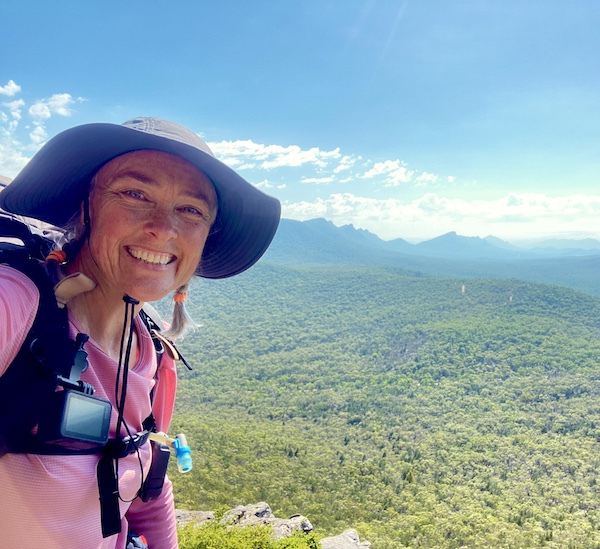
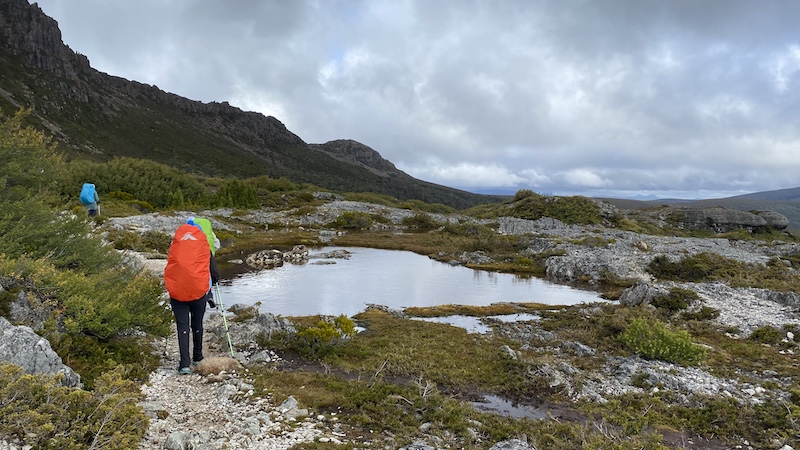
Looking back along the 164km Grampians Peaks Trail
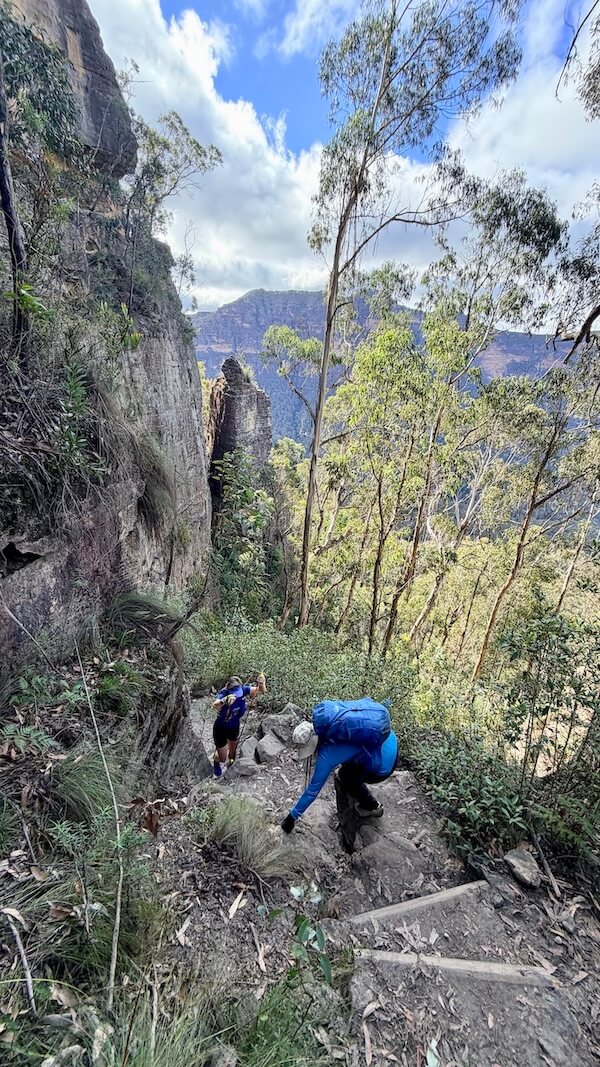
Perrys Lookdown (Blue Mts, NSW) 600m descent over 1.5 km
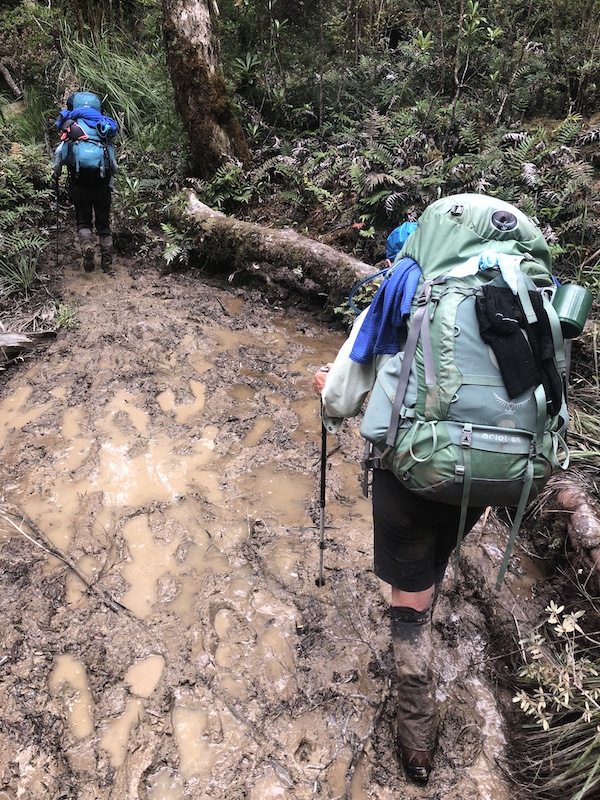
The South Coast Track, TAS includes thigh deep mud, beach sand, root strewn forests, compacted boardwalks
Why do our muscles hurt and we feel stiff after exercise?
Caro: There’s been times (usually about 2 days after an adventure) when I remember ‘dropping’ onto the toilet seat because my legs were so sore they wouldn’t let me sit down like a normal person.
Muscle soreness in the hours or days after exercise is pretty common. It is a phenomenon that is known as ‘DOMS’ (delayed onset muscle soreness). Typically, this will happen when we are exposed to some type of exercise the body isn’t currently used to, and there is a ‘spike’ in stress on the muscles. For hikers, this will often happen if we do a hike where we have:
- A big jump up in distance (than what we have recently done)
- A big jump in elevation change (than what we have recently done)
- A big change in terrain (e.g. if you are mostly walking on the treadmill or on pavements, and then go on a hike with rougher terrain).
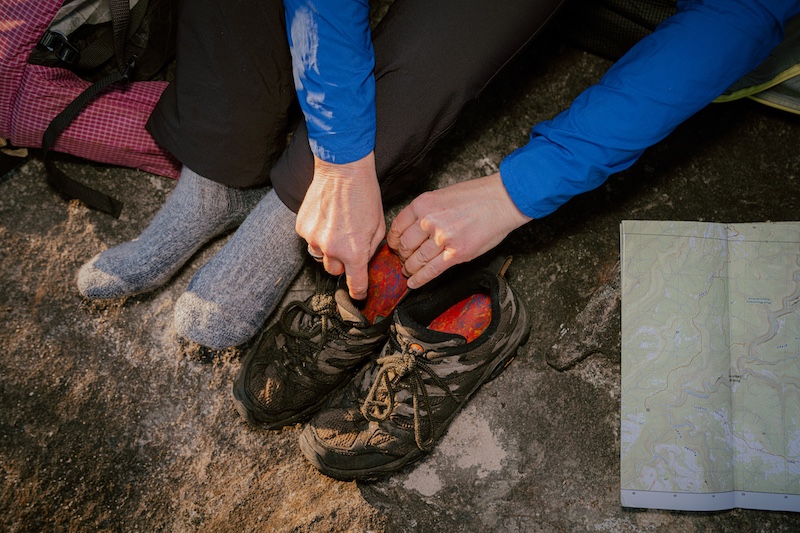
To a lesser extent, this can also happen from a change in footwear (where certain muscles suddenly get a ‘new’ stress as you walk), or even when we first introduce trekking poles (and the arms are suddenly doing a lot more work).
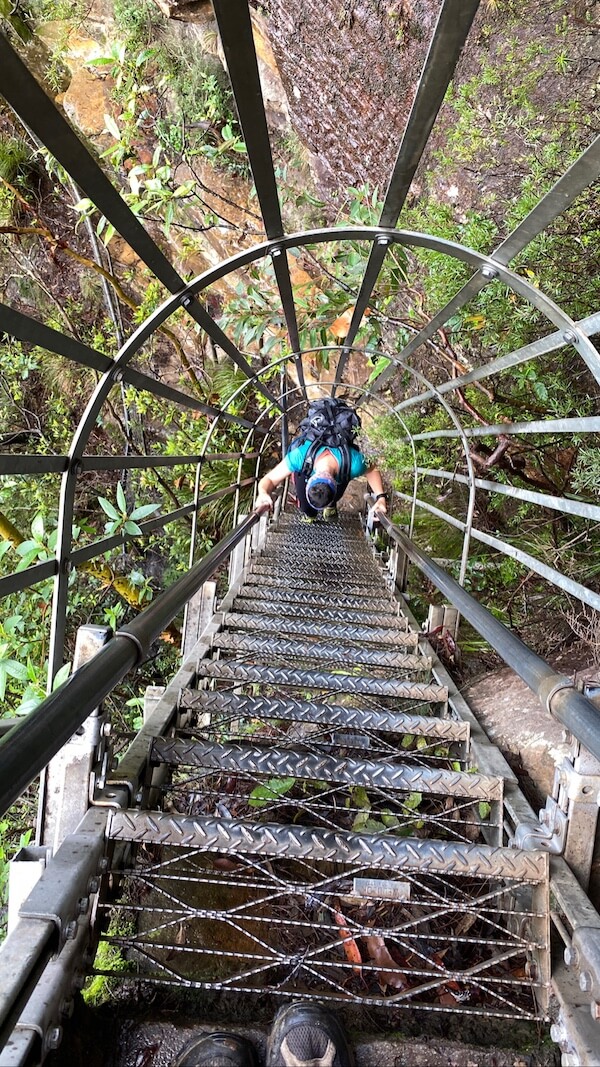
Another big contributor to DOMS is when we are exposed to exercise or movements where there are many ‘eccentric muscle contractions’ (e.g. where the muscle contracts while it is lengthening). In the hiking context, this is really common when we are tackling steep and/or slippery descents (where we are lowering ourselves down a bit more slowly than usual). This situation is probably where we often hear the worst stories from hikers with muscle soreness.
Why is DOMS delayed?
Caro: So, why is it worse a day or so after big exertion?
When our bodies are exposed to this ‘new’ stress, the muscle experiences a tiny amount of damage (this is totally normal). Generally, the soreness that comes afterwards is from the body’s response to repair the damage (damage is caused → there is an ‘inflammation response’ to start healing → our pain receptors get more sensitive → muscle soreness). This process isn’t immediate, and will have a delayed response after your actual exercise.
One day adventure vs multiday hike?
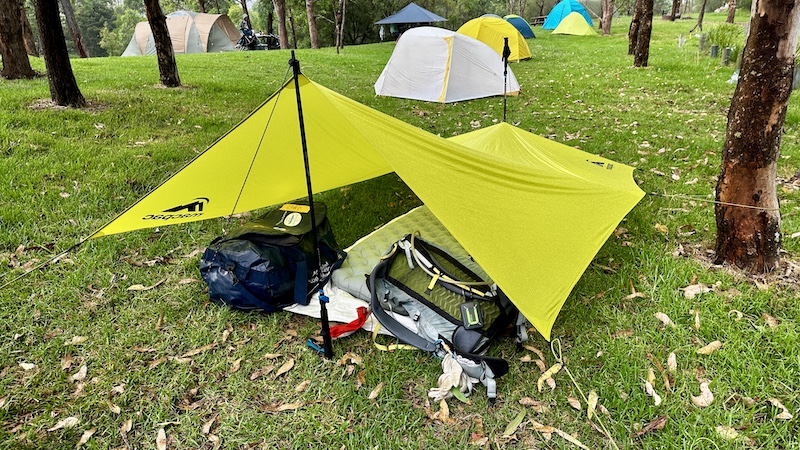
Caro: Ah, that makes sense. Is there difference between soreness from say, one big descent (Perrys Lockdown, NSW, Donna Buang, VIC) vs cumulative soreness from a multi-day trip?
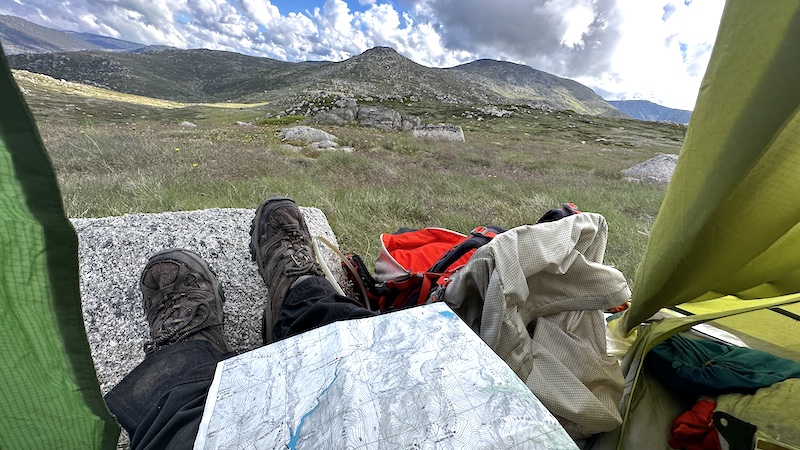
For the most part, they are pretty much the same – just to different degrees. For a multi-day trip, we also have the added risks of under recovering (which can contribute to muscle soreness). For example, sleep is a major component for recovery. If you are on a multi-day trip and you don’t have your sleep systems dialed in (or if your sleep is disturbed by one of the dozen common reasons that can happen on the trail), then this can affect our recovery, which can affect our energy and fatigue levels and increase our risk of muscle soreness.
For this reason, the accumulated soreness on a multi-day trip can often appear, even if we can’t remember any intense sections that really challenged us.
How does pack weight affect DOMS?
Caro: Got it. What about when we add in pack weight?
Anytime we add weight in a pack, we are adding a disproportionate amount of extra force through the lower limbs. This force increases dramatically on descents and downhills. So while you may be comfortable hiking or descending without a pack, or with a certain amount of weight, if you do the same thing with even an extra kilo or two, it is pretty common to get sore.
Hiking poles for reducing muscle soreness
Caro: So, can hiking poles help? (longer for descent, 90 degrees for flat and shorter for up?)
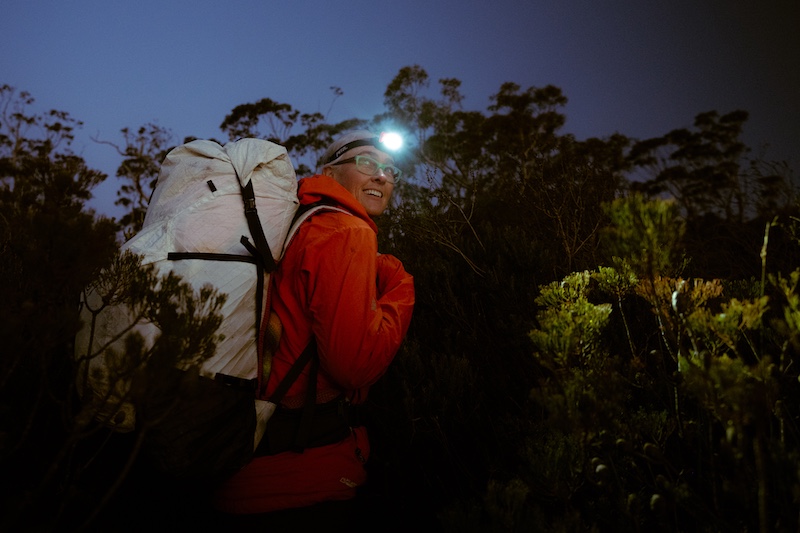
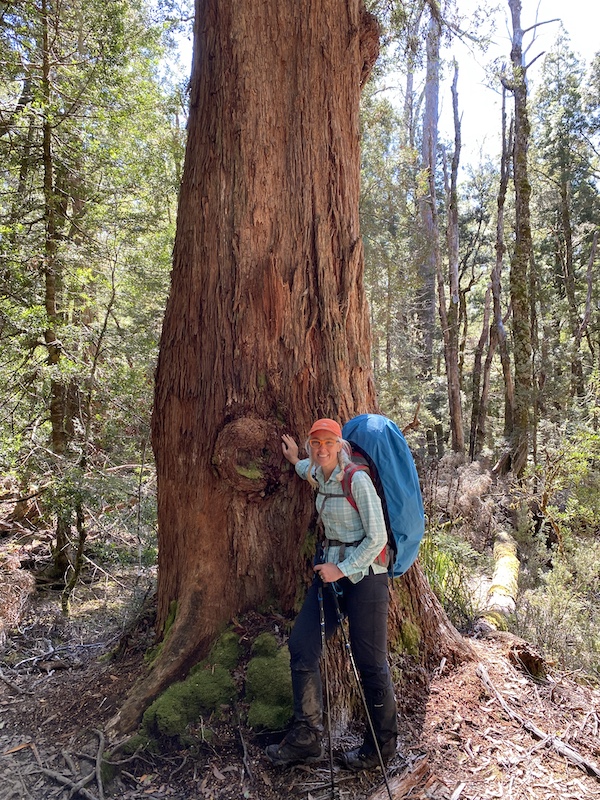
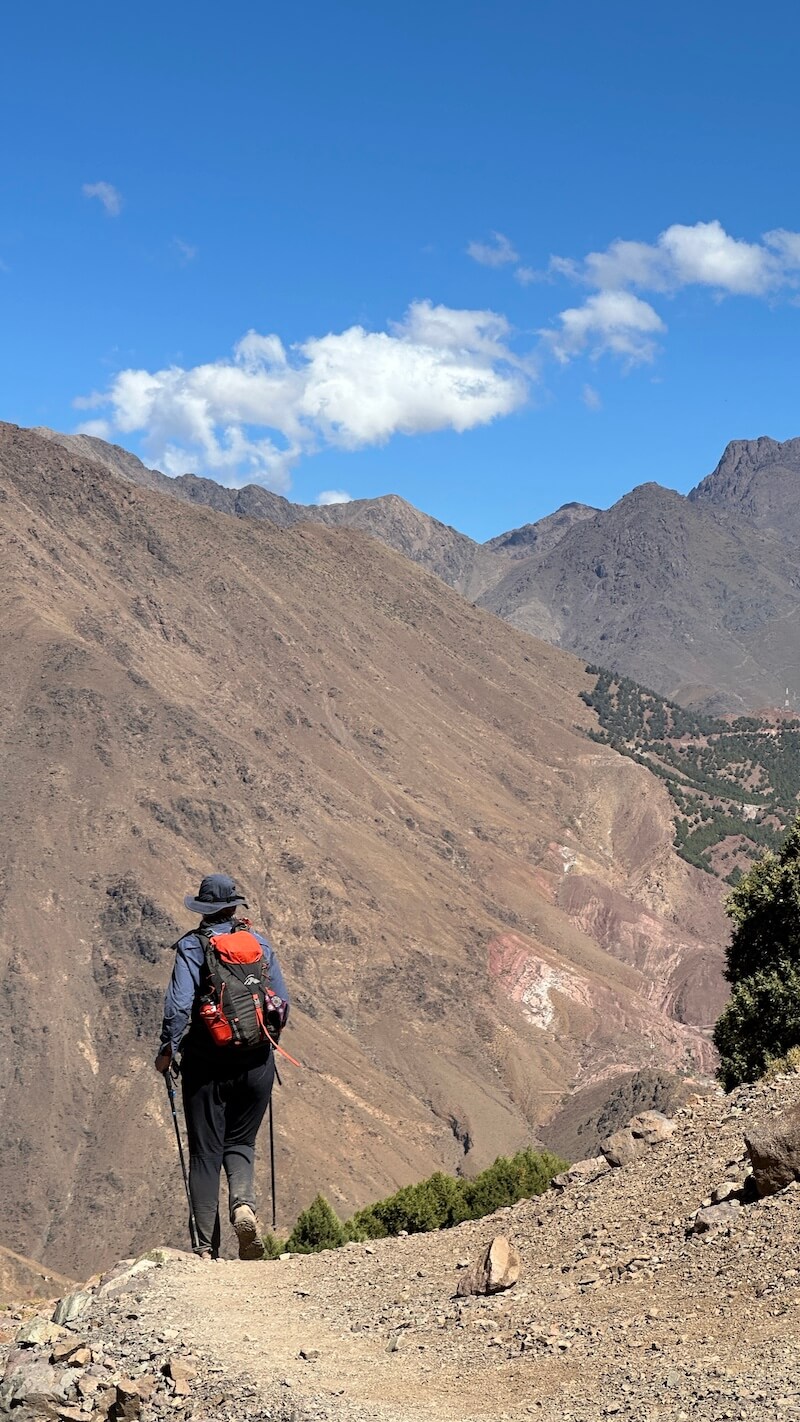
Poles can significantly reduce the stress our lower limbs take on descents – so they can directly reduce this muscle soreness (if used properly).
On uphills, they won’t directly affect the chance of muscle soreness, but they can indirectly help. This is because using poles on uphills can reduce our rate of perceived exertion (e.g. make things feel easier) and offload the legs (by using your upper body). Which means you will reach the top of your climbs a bit fresher, and have less fatigue to manage for the descents (where the soreness typically comes from).
Anti-inflammatories
Caro: What are your thoughts on Ibuprofen or other anti-inflammatories?
‘Vitamin I’ is used by hikers around the world to manage muscle soreness. And it can absolutely be effective.
However, one factor that is often overlooked is that not all inflammation is ‘bad’. And in the case of DOMS, inflammation is a part of the process to recovery. So by suppressing that inflammation, we might be delaying recovery (to a degree). On top of that, if you are doing a multi-day adventure, there are potential medical consequences of continually using anti-infammatories for days on end.
Ultimately, if you are worried about pain management, it is always best to chat with your health care provider and discuss a pain management plan that is going to be right for you.
Treatments for DOMS and sore muscles
Caro: What about other treatments like massage? Cold water? Compression tights? Sauna?
There are dozens of things that can help ease DOMS (if they appear). Probably the best thing you can do for DOMS is active recovery. Instead of just lying on the couch after a hike (or in the days afterwards), you intentionally plan to do some light, gentle exercise to get the blood moving (such as swimming, cycling or something similar). This isn’t so practical for a multi-day hike, but can be great for day hikes. Massage can be great. If you don’t want to pay for a massage, then doing some ‘self-massage’ with a foam roller or ball can be just as effective (and if you are on the trail, using a water bottle, trekking pole or cork massage ball are great options). [Caro: I love a Nalgene roll over the ITB].
I am a big fan of sports compression tights, which can be worn for a few hours after a hike (either at home, or while in camp).
Water immersion can also be great. Cold water can be beneficial (whether it is in the ocean, in a pool, bath or, if you are on the trail, a river or lake). Hot water can also be nice (e.g. in a bath, spa or heated pool).
If you want to get the best of both worlds, doing ‘contrast therapy’ where you alternate between hot and cold water can be amazing. This isn’t very practical in most situations… but if you have a weekend in the Blue Mountains there are now 4 amazing sauna’s to choose from:
Nutrition and hydration
Caro: What about nutrition and hydration before, during and after… can that help?
Nutrition and hydration can play a significant role in muscle soreness. This is a big subject, but in brief:
- If you undereat, underfuel or are dehydrated during your hiking, you will experience more fatigue (which can increase muscle soreness)
- If you undereat, underfuel are dehydrated after hiking, your recovery will be inhibited (which can increase muscle soreness)
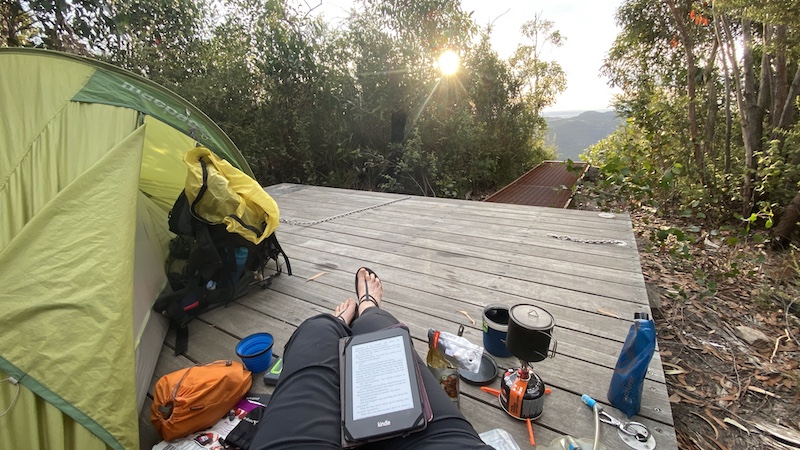
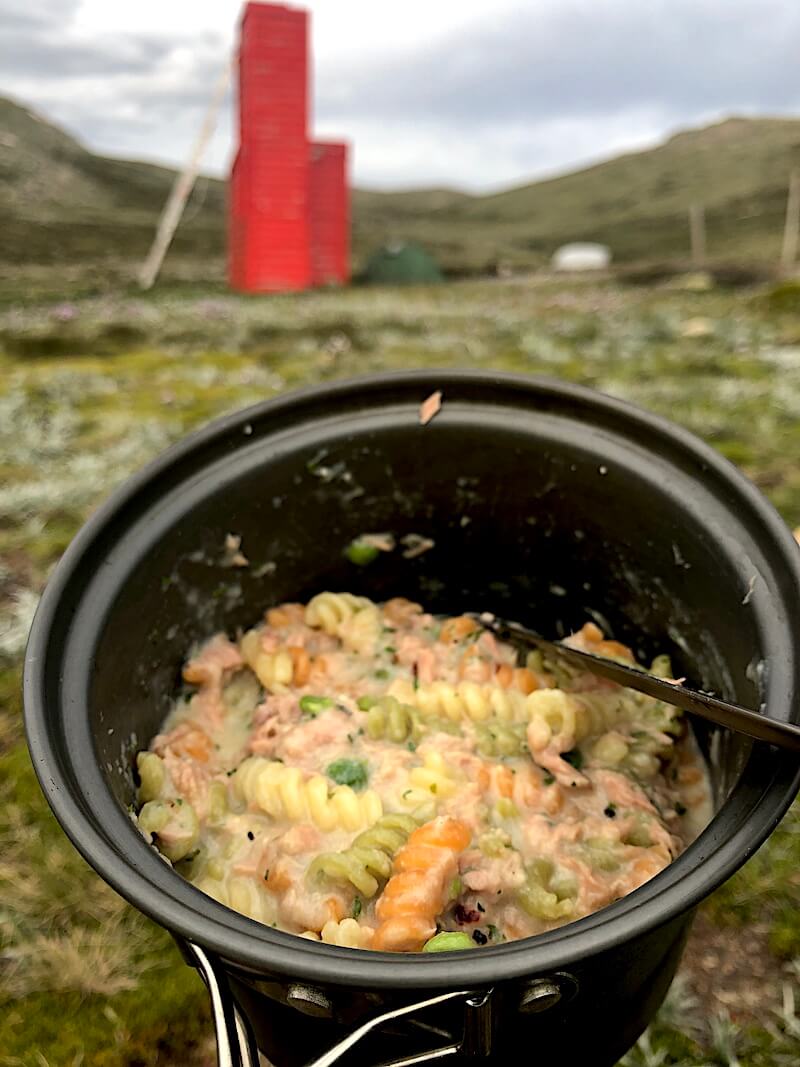
So what’s the solution? Well, again, nutrition is a big subject, but a few simple tips that can make a big difference:
- Before you start hiking, aim to have a well rounded meal (carbs + fats + protein) in the hours before hiking. (if you are hiking first thing in the morning, then make sure you have a good dinner the night before). Also, aim to start your hike fully hydrated*.
- During hiking, aim to snack regularly (I like to recommend my hikers have a bit or two of something every hour or so) and try to drink regularly and maintain hydration.
- After hiking, aim to get another well rounded meal relatively soon after finishing (e.g. in the next couple of hours). And if you are dehydrated, aim to rehydrate as soon as possible.
A simple measure of hydration is urine colour. If you have clear to straw coloured urine (Caro: like sauvignon blanc), this means you are good to go. If it is darker (Caro: heavy oaked chardonnay), drink some more water.
Stretching before or after exercise
Caro: I grew up in an era where we were always taught to stretch before and after exercise. Does stretching actually do anything for DOMS, or is it just one of those things we think we should do?
Stretching before hiking can be a nice way to prepare for the day. Stretching right after a hike can be a nice way to relax the body and mind. But they probably won’t make a major difference to your risk of getting DOMS. Once DOMS appear, stretching can be another strategy that can help ‘ease’ off the discomfort slightly (but it is not something that will likely prevent it in the first place).
Training for multiday trek
Caro: Ah, good to know! What about someone training towards a big multiday trek, what can they do to avoid DOMS in the buildup?
Three things:
- have a plan for your training hikes, and aim to have a slow and steady build up of your hiking time + pack weight from now until your adventure date. The slower you can go in building up (while still ensuring you are ready for your adventure) the better. If you need some direction with this, this is a simple guide to help: How To Plan Your Training Hikes
- incorporate some structured and progressive strength training into your weekly routine. Building up the strength and endurance of the muscles can make a major difference. If you are not sure how to get started with this, this is a free mini-course that teaches you how to get started with strength training for hiking: Strength Training For Hikers Mini-Course
- incorporate some shorter ‘hiking specific conditioning’ sessions into your week, where you can expose the body to specific hiking challenges and overload them
For example, do some stair or hill climbing workouts and, over the weekend, build up your pack weight to slightly heavier than what you need for your actual hike. This is a simple way to overload your muscles (in a controlled environment) to build endurance and resilience, and reduce the risk of them getting surprised or overworked on your actual adventure.
When to seek medical advice
Caro: Where’s the line between ’this is just DOMS.. it’s OK Caro, you’ll sit on the loo seat normally soon’ versus ’this could be the start of an actual injury’?
If you are worried if you are dealing with an injury, always best to chat with a physiotherapist. Beyond that, a really simple lens you can look at this is: If the muscles are sore, but it is a dull pain or ache, then it is usually fine to just give it time and space to recover.
If the soreness is more ‘sharp’, ‘electric’, ‘alarming’ or just is stressing you out, then that is a sign you want to go get things looked at.
And for those in menopause, it can be yet another gift that keeps giving ;).