One of the annoying little things about being a woman who loves the outdoors is deciding how to manage your period out in the wilderness.
I say little things because in the scheme of it all, once you’re out there, breathing clean air and hauling our bodies up to a high point, the hope is that having Aunt Flo’s painters join the adventure in isn’t going to affect your experience. Well, that’s the hope isn’t it?
For some women, who have a tricky time with their periods, heading off into the bush just adds another layer of complexity and perhaps a reason not to go out at all. It would be a shame to base your decision to go hiking (or any other adventurous pursuit) simply because you’re on your period. But I get it – everyone (and their bodies) is different – you need to make the choice that’s right for you.
How times have changed
Back in 2015 when I wrote this post and made this video on How to Deal with Periods when hiking, I’d never heard about menstrual cups and later, discs. Some very smart readers told me about how good cups were and that they would never use anything else. With all that encouragement, I knew this was something I needed to try out. Voila! The JuJu cup. It was the first Australian manufactured menstrual cup and is sadly no longer available – they disappeared in 2023 and the internet seems bewildered as to why. Back then, they were true pioneers, ahead of their time. These days, cups/discs are much more mainstream in period management, along with period underwear.
This article is for menstrual cup/disc curious women, looking for alternatives and options when managing their period in a wilderness setting. It’s also written to help inform others who go on adventures with women to gain an understanding into our world and why, for instance, we may sometimes need more time during toilet breaks. If that’s not something you’re interested in, leave now. You’ve been warned.
First look
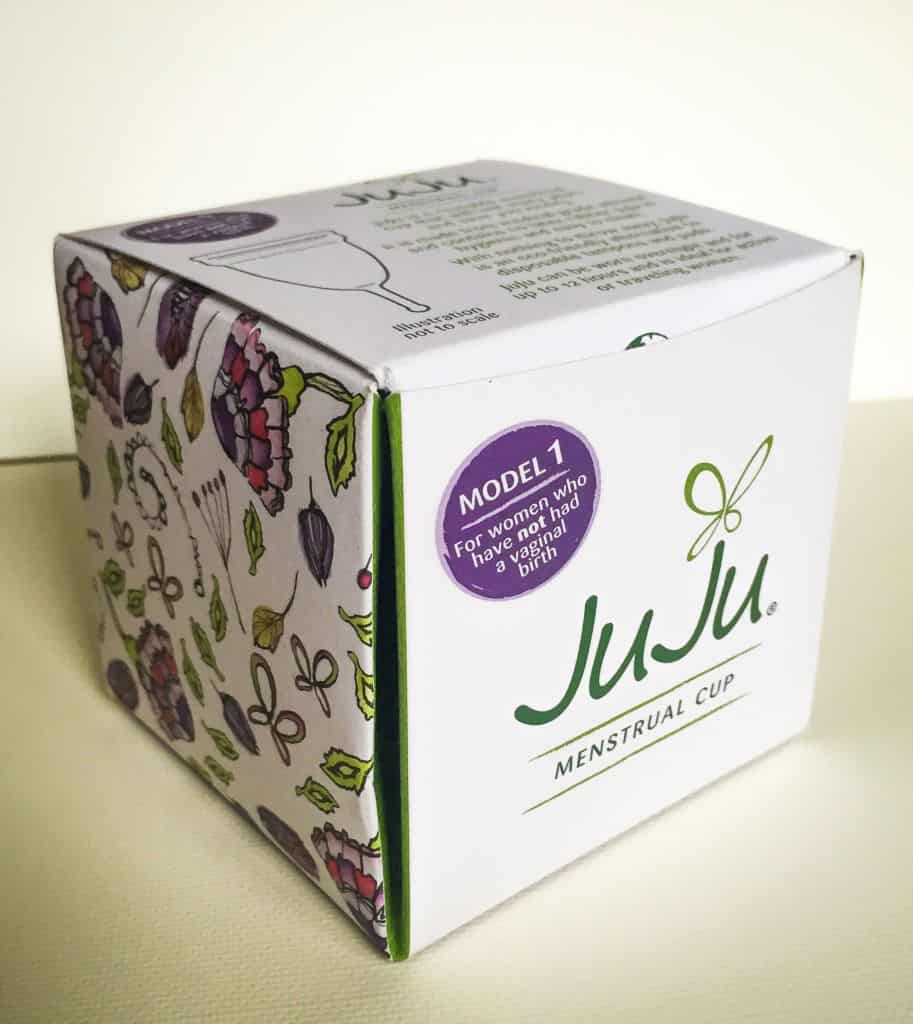
When the cute little box arrived, along with its handy satin little baggie, I’ve got to say, I spent a fair bit of time just looking at it.
I was suddenly taken back to that time as a 14-year-old, sitting (for like, forever) on the loo in my family home and reading, then re-reading tampon instructions.
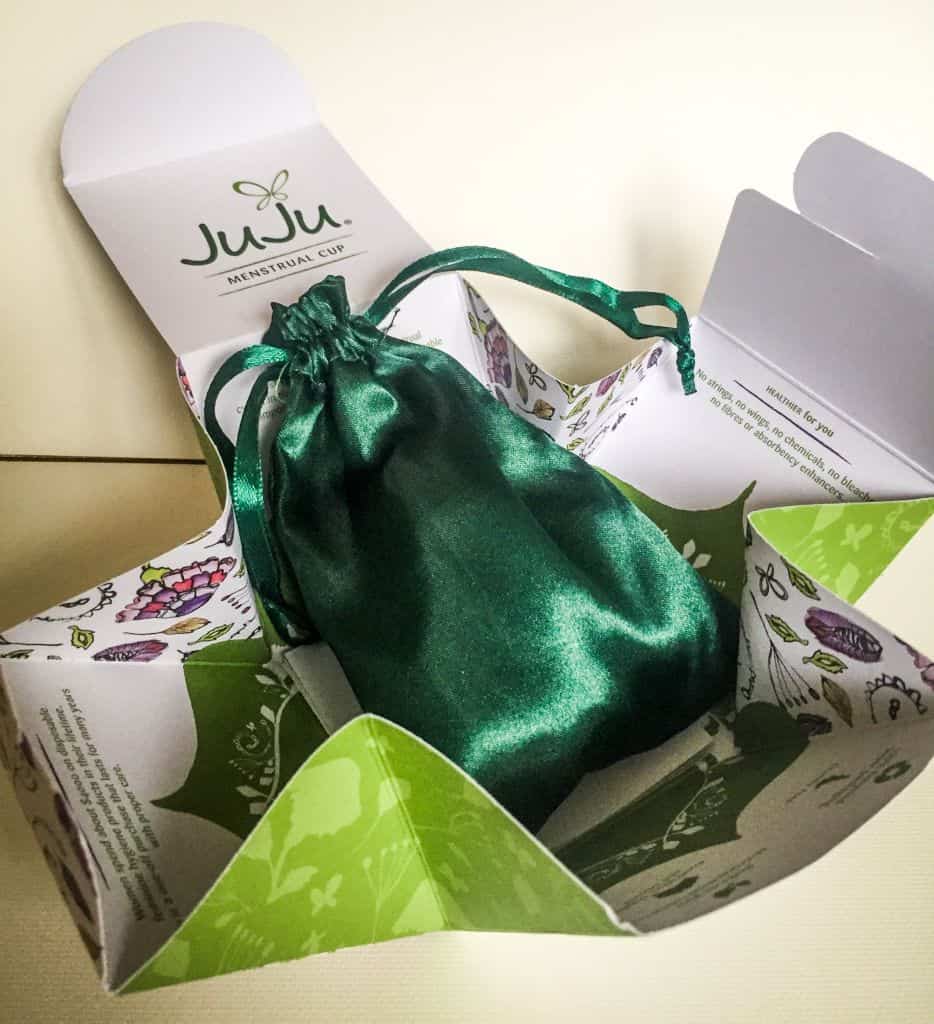
Convinced I’d die a painful death from Toxic Shock Syndrome, I put aside my fears and then wondered what all the fuss was about. Cut back to the arrival of the cup, and here I was again, sitting on the loo reading, then re-reading, the instructions... I was distracted from the task at hand by the story of where the name, JuJu, came from:
“The word juju travels back to West African rituals of magic and power. Juju is believed to cure ailments of mind and body and can be increased with selfless acts and good deeds. Everyone of us has the ability to use our energy, our juju, to heal our surroundings and ourselves.”
At this point, poised for my first attempt, little did I know how pertinent these words were and how much they would ring true for me by the end of that cycle.
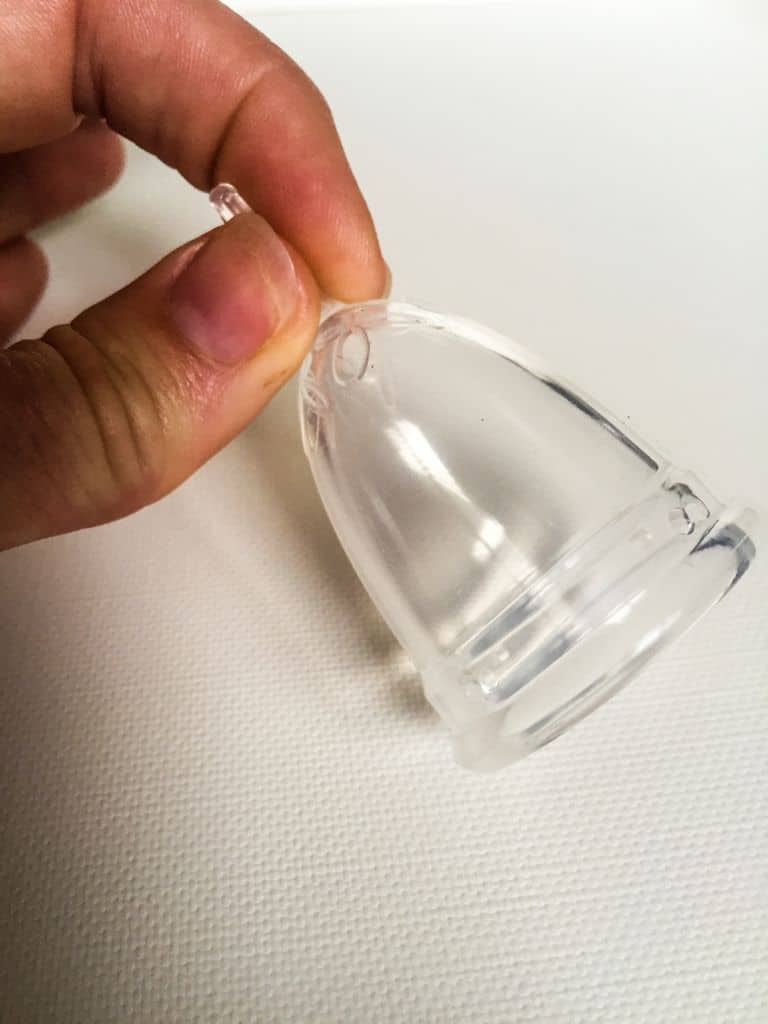
Speaking of cycles, the lovely Brenda from JuJu (who sent me the cup to test) asked that I give it 3 cycles before writing this review. To be honest, they’re right, and that is my first bit of advice to anyone looking to start using a menstrual cup/disc. It takes time. Be persistent; don’t expect to get it right straight away.
However, in the instant society that we live in, I confess that it can be easy to become frustrated when something doesn’t happen or work for us immediately. I guess this is a nod to one of the things about menstrual cups that sets them apart from the instant and invisible nature of tampons and links into the whole JuJu name and concept.
That thing about the mysterious and ancient connection that bleeding gives me to every woman who’s ever lived. The linking to all that stuff around feminine strength and our ability to grow and nurture life within us. The monthly reminder that we have the ability to bring forth life, in all its messy, bloody, painful and earthy ways.
If you’ve stopped reading already, well, happy days. If you’re curious about where I’m going with this, stick with me.
I thought I was testing out a feminine hygiene product. A surgical grade, flexible cup of silicone that would catch my flow for up to 10 hours (as opposed to a tampons <4hrs) and allow me to spend time in the wilderness, not worrying about hygiene, leakage and waste. Turns out… this road test was about become about a whole lot more.
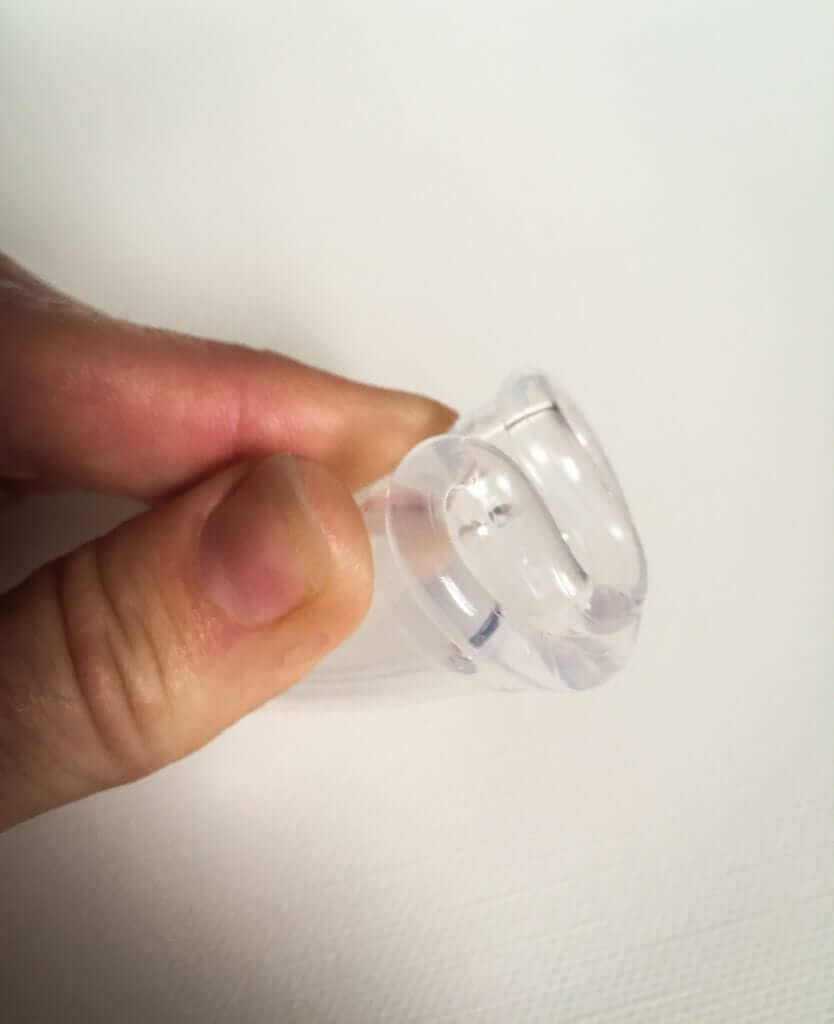
Back to the bathroom…
Read instructions again. Re-read them.
I want this to work. I really want this to work.
There are so many reasons why these things make sense, not just for the practical and financial side of things ie. you only need to have 1 or 2 and don’t have to buy a new one each month, but environmentally. I hate to think about the amount of landfill I’ve created over the years before switching to cups – it could be up to 10,500 pads or tampons over a lifetime.
What is it with society that it has worked so hard to hide all traces of women’s blood and leads us to believe that periods are dirty and something to be embarrassed about — certainly not to be spoken about. I know that some people believe the line, “if men had periods it would be different,” but I’m not so sure I agree.
What to expect when using a menstrual cup/disc
Firstly, you will get in touch with your blood and become more familiar with your body than you may ever have been before. I can’t explain more without telling you a bit about myself and my upbringing.
My experience of growing up was of a loving home. It also just happened to be a very traditional and conservative Christian home where I was taught that sex outside of marriage and exploring your own body was wrong. As a consequence, I was somewhat of a late bloomer in understanding what goes on, down there.
Using menstrual cups forces you and your bits to become one, which leads me to wonder if they’re suitable for girls who’ve only just started their period… then again, maybe it’s a great way to help educate them on how our bodies work — how marvellous they are. They’d learn pretty quickly that none of us are built like the diagrams inside a tampon box – in fact, we’re much more amazing. [Oh and in case you’re wondering, I’ve never had a baby… girlfriends have told me that childbirth was their biggest lesson on their bodies and taught them everything they knew ;)]
The other thing that cups do is they help you get over any ick factor that you might have had about your period. Tampons are a great way of making your period disappear. With that approach, you never really understand how much you bleed, and in one sense, help perpetuate the myth that bleeding and periods are somehow dirty and something to be ashamed of. [Editing this article in 2026, I’m so chuffed to hear that hang- ups and shame around periods has/is disappearing. Being around teenagers on Duke of Edinburgh Adventurous Journeys, it was so encouraging to hear such healthy, frank and respectful discussions around periods, regardless of gender.]
With a cup, you actually see your blood, pooled inside the cup when you remove it. For me, it was a bit of a lightbulb moment, “Ah, that’s how much I lose.” Ah, got it.
So, back to me sitting on the loo…
All went according to plan on the instructions and I left the bathroom feeling quite proud of myself. Kinda like I did when I was 14.
When you can’t remove your menstrual cup
Day 1 was a success with 10 hrs of issue free use. It was when I came to take it out again that everything seemed to go a bit pear-shaped.
Thankfully, I have an amazing friend Kylie, who is not only a cup user herself, but a Doula and midwife.
She sent me the link to a hysterical Buzzfeed post that helped me relax, before offering some sage advice to help me get it out. Now, 3 months [and editing in 2026, 11 years] on, I find our FB Messenger conversation freakin’ hilarious… at the time… not so much.


So, now I’ve shared WAY more than I ever wanted to through this bloggy thing of mine, here’s my
15 top tips for using a menstrual cup:
- give it at least 3 cycles to get it right — be gentle and patient on yourself as your learn
- make sure you’ve got the system sorted before you head out in the bush (see what I did there?)
- don’t forget to laugh if it goes horribly wrong
- when you’re out away from home and still learning, try to find a public loo that has a hand basin in the cubicle
- wear a panty (OMG, I hate that word!) liner whilst learning or even period underwear – just in case
- don’t think of it like a tampon – it doesn’t go in that far. If you do, it will not only probably leak, but you may have trouble getting it out
- don’t freak out if you can’t get it out at first… you won’t die and probably don’t need to go to the hospital… have a glass of wine, break the seal (that sucker is held in place thru suction!) and try again in 5 mins.
- expect to play hide and seek if you try to take it out first thing in the morning after waking up. Walk around a bit and give it a while to let gravity make it easier.
- When you rinse it out under the tap, be careful to turn the tap on gently before bringing the cup underneath the water on an angle. If you don’t, you might just cover your bathroom and yourself in a bloody, watery explosion. Noice!
- Wilderness: carry extra water (I carry an extra 600ml water bottle) that is reserved for changing, washing and hand cleaning = a hiker’s bidet can make it easier
- Wilderness: dig a cat hole (as though you’re doing a #2) to bury the blood (sheesh, that sounds like some type of ancient druid rite!)
- Wilderness: you may want to change it wearing disposable gloves (that you then need to ziploc bag and carry out) to save on the amount of water you need for washing your hands
- Wilderness: allow yourself more time at the pit-stop along the trail
- Wilderness: the great news is that I lasted 10hrs before needing to change, which means that during a full day hiking (leaving camp at 8am and arriving into the next campsite at 5pm) I didn’t need to think about it during the day… yay.
- Wilderness: don’t forget hand washing and sanitiser… remember, this can be a messy business
As I said earlier, I really wanted to make this work. I really wanted to be able to say, ‘Why yes! I use a cup.’ And after 3 months, a few laughs, a few mishaps, I can now say exactly that, along with having a far greater understanding, awareness and connection to my body.