
I’ve always been pretty fond of the cook-in-the-bag concept out in the bush. Besides doing away with the washing up, it’s another reason not to take a plate/bowl with you, reducing the bulk and weight in your backpack.
Our fabulous Kiwi cousins at Backcountry pretty much have this concept sewn up with their tasty freeze dried meals (I totally rate the Roast Lamb and Beef Curry!). In fact, I pretty much reckon that their meals are the bench mark when it comes to tasty meals in the wilderness.
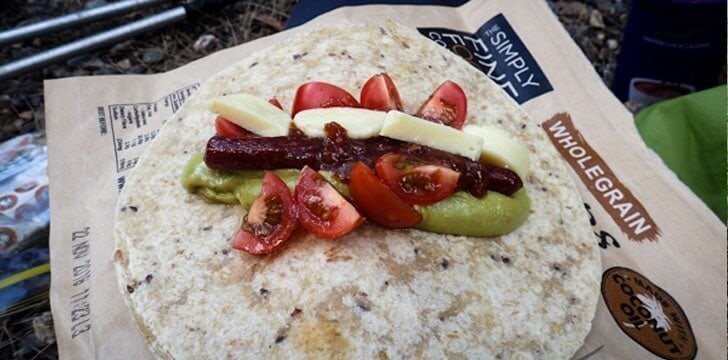
The other day, I made the decision to head out bush at the last minute and not only had my own stash of dehydrated meals run out, but I didn’t have time to get to a camping store to grab a Backcountry. Sniffing around the supermarket I thought I’d experiment with something that wasn’t promoted as cook-in-bag, but as it was in a foil lined sachet, I thought I’d give it a red hot go!
Not designed for cook-in-bag (and the wine bladder has water in it… honest!)
I knew that the ‘roasted vegetable’ component of the product would be pretty light on, probably needing a magnifying glass to find the vegies, so I took a ziploc bag with some dried vegies (dried peas and dried shallots) from the supermarket and two types of dried mushrooms from the Asian supermarket, added herbs & chilli powder and some good ol’ Biltong, which I threw in before adding the water.
Then, just like a Backcountry, I simply added boiling water, folded over the top and sat upright for about 10 mins, waiting for it all to get hot, gooey and tasty – then ate it right out of the bag. Easy!
It would really suck to suffer from vertigo. And I don’t mean watching Jimmy Stewart and Kim Novak run amok in San Francisco only to discover the DVD is missing the last 10 minutes.
I’m talking about having an unhealthy urge to throw oneself off of cliffs when it has nothing to do with mental health or abseiling.
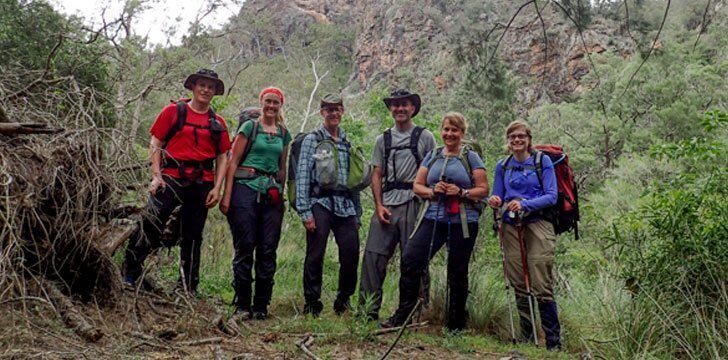
Thankfully, neither myself nor my 5 other intrepid adventurers from Sydney Bush Walkers Club suffer from such a fate. Just as well really, considering what we planned on doing over Easter 2013.
I planned this Easter trip to start on Saturday, which meant that Good Friday was spent as a leisurely day packing and slowly heading up to the Walls carpark where we camped for the night. Checkout a 360 of the sunset which I enjoyed with just one or two glasses of red. Ah, a great start to a holiday!
Saturday morning dawned bright and clear and we tucked into a quick breakfast at the shelter shed before heading out.
After a quick briefing, I broke the news to the 3 newer members of the club that I wanted them to really work on their navigation skills and take the lead with map and compass. Nothing like being thrown into the deep end. Kind of like Celebrity Splash… But thankfully not.
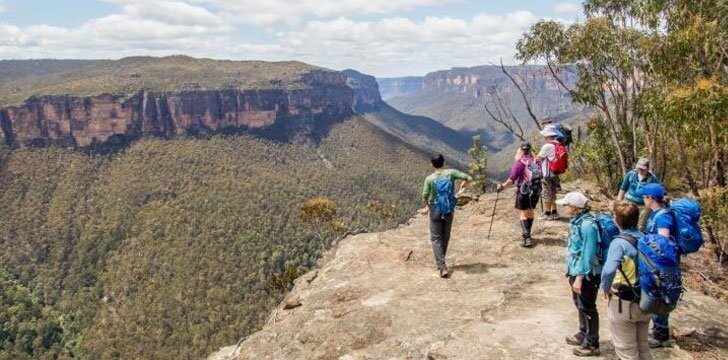
Not feeling in too much of a rush and slightly delirious from the amazing Autumn day we were having, we took our time passing Dance Floor Cave and headed up onto Seymour Tops to take in the views across to Kanangra Main Canyon.
I was a tough leader and pushed the new members to work on their navigation
The navigators located the correct turn off and we headed off towards Coal Seam Cave. As the video explains, this is a great little spot, where some far-sighted individuals installed a bucket underneath one of the (almost) permanent water drips from the cliff lines above. This bucket has quenched the thirst of many tired hikers, after lugging themselves up one of the many alternate ridges from the Kowmung River on a hot day. The water is a little brackish, but I’d be happy to drink it.
Speaking of these alternate ridge routes, this was what our trusty navigators now focused on. For the rest of the day, they followed the toppo diligently and after what seemed longer than I thought it should have (an elastic ridge no less!) we arrived at the river for a refreshing dip, just as the sun was sinking over the tops.
It was here that the newer members of our club also narrowly avoided one of the little known hazards sometimes associated with the dear Sydney Bush Walkers Club.
You see, there’s been something of a tradition in the past of some members, well… getting their members (and other bits) out.
Not just a young person’s game… DR on the right, will be 80 in 2013.
You’ll notice from the above pic that our club has an incredibly diverse age range, having started in 1927, with an influx of younger people in their 20s and 30s joining in the last 5 years or so.
I love it when new members come on their first walk and see what they perceive as “elderly” people at the briefing in the morning. I can see what they’re thinking. What they don’t realise, is that these ‘old dears’ have been walking their arses off since they were teenagers, with exceptional fitness and endurance. These grey haired gurus can carry a full pack up and down any Kanangra 850m ridge, for 10 hours without blinking or breaking a sweat, whereas most gym junkies only workout for a couple of hours… tops.
I then have a secret delight when about 3 hrs into a walk, the Crusties (my term of endearment for the older members) are going strong and the 20 something’s are struggling to keep up.
So… Back to the, ahem Member’s member…
DR thoughtfully went ahead on the track and beat us younger types to the river, allowing himself to feel the breeze, splash in the river and truly be one with nature, without scaring the younger, Member’s members.
Finding a campsite was next on the agenda and although there was one nearby our swimming spot, I would only give it a 2.5-3 star rating. Surely we can do better than that! You know when you just “feel” that there’s got to be somewhere better… just a little further along? Now sometimes that type of thinking can lead to disappointment and plodding by head torch, “just another 500m”, through thick scrub for another 5kms or so. Thankfully, we didn’t have to go that far before we came upon a truly amazing clearing with lush green grass – a true 5 star campsite and just as the sun was disappearing behind the hills.
Sorry… this one’s a secret!
After a deep nights sleep, we woke up to Easter Sunday and what was going to be the hardest day of the trip. There was a whole lot of UP involved and a fair bit of navigating by map and compass to ensure that we hit the old pass in exactly the right spot.
The lower ridges were pretty clear and the going was fairly easy, with only the last pinch up one of the buttresses of Ti Willa Plateau causing us all to huff n’ puff. We pulled ourselves up through rock falls and through scrub, occasionally experiencing the two steps up, one slide back on loose scree, constantly checking our compass bearing and reading the terrain, before magically… we looked up… and right in front of us was the bottom spike of the pass. Our navigators had done extremely well!
Up we went, making use of the chains and spikes along the way and being super careful on the very slippery Casuarina needles on the ledges. One slip and… well…
Steve coming up Compagnoni Pass
Lunch was had at the cairn on the top of Ti Willa plateau as a cool change moved in from the south. The temperature dropped about 10 degrees in 10 minutes and a gentle wind picked up. Off we headed (to warm up again!) to walk across of top of the Plateau and head for the sleeping cave. In the past, there have been stories about impenetrable scrub and Hakea making this journey not very enjoyable. Thankfully, we found this not to be the case. Sure, there were a few pockets of the stuff that made the going slow and painful at times, but generally speaking, it was good going.
We made good time and only felt a few of the raindrops from the threatening sky, before arriving at cave and starting the fire. Drinking water was flowing well in the usual place and before long we were enjoying a lovely afternoon’s cuppa.
As there was still at least 3 hours of good light left, I offered to take everyone to a great lookout to take in our elevated surroundings. This did involve a bit of scrub, but we be hardy types in Sydney Bushies, Argh!
The evening was calm and still at the cave and we all enjoyed the hot rum and lime drink that I brewed to a secret recipe, which no doubt helped us sleep very well. It was at this point that I broke the news to the group that I wanted to leave the cave at 7am. Oh the shock of it! They’d clearly gone soft. You’d have been forgiven for thinking that I’d told them to sacrifice their first born on the morning fire… Sheeesh. Get used to it guys – I’ve started to enjoy early starts!
Resting around the fire
The lazy bunch didn’t quite manage 7am, but around 7.20am we slogged up the hill out of the cave and made Mt Cloudmaker in good time, where we signed the logbook before heading off along the footpad towards the Walls.
This stretch of track-ette, is the most used piece of terrain in the Kanangra-Boyd Wilderness Area and forms part of the traditional Kanangra to Katoomba (K2K) route. Although there is a footpad, there are no signs and the track does disappear here and there along the way. For those experienced types, you might find it hard to believe that there have been people lost between here and the carpark, even in recent times.
The views along this track are truly amazing, not only north or south into the valleys and gorges, but all around – I am a big fan of grass trees (Xanthorrhoea) and spots along here literally explode with them.
Looking down Kanangra Gorge
All too soon, we found ourselves having lunch on the top of Gordon Smith’s Pass which always signals to me that the end is nigh… the Kanangra-Walls carpark is just a few kms away.
Back at the cars, we changed clothes and decided to head to the Gardener’s Inn at Blackheath for a well deserved cooling ale before heading home.
A truly wonderful Easter break and a great adventure!
When I started this blog thingy, I didn’t really know what people wanted to see. To be honest, I’ve been a wee bit surprised when digging around in the background and seeing which posts turned out to be the most popular!
Surprise, surprise. You lot quite enjoy reading trip reports. Really? Huh.
Huayhuash Circuit (Peru) – Day 9
So I’ve decided to start posting rants and raves about my various outdoorsy adventures… and as I tend to get out around 7 times per month, I should have plenty of fodder for you my pretties!
Ah, but before I get cracking, I should warn you. I’m not going to be writing too much about the specifics of tracks, routes, grid references and locations, etc. As many of my adventures are off track and require traditional compass and topographic map navigation, it would be pretty dodgy of me to be putting that type of stuff out there and potentially leading people astray… nay!
If you’re an experienced hiker / bushwalker from the Sydney region, you’ll probably recognise many of the places and photographs. I just ask that you be a bit circumspect in your comments to avoid over-sharing of the details of our precious places
Don’t worry – I’m not elitist though! If you’d like to know more about these places and experience them for yourself – I recommend you join a bushwalking club. Not only will you meet a bunch of like-minded people, but they’ll teach you all you need to know and take you out into these wild and wonderful places. To find a club near you, visit Bushwalking NSW or Bushwalking Australia if you’re from another state.
One of the questions I get asked most is what do I eat in the bush? It might also explain why my Basic Food for Hiking Video is the 2nd most popular on the channel. Us hikers love our food!
With all that fresh air and exercise, we sure build up healthy appetites and I’m not convinced that all of it is about ensuring correct nutrition (see A Little Tipple in the Bush). So how do we guarantee tasty, healthy food, whilst keeping pack weights to a minimum? How do we enjoy such treats as Mussaman Lamb or Spag Bol in the middle of the wilderness?… The answer is dehydrating!
If alchemy is the art of turning lead into gold, then dehydrating is like some strange kind of bushwalking alchemy. Here’s some tips to get you started!
The Dehydrator
Dehydrators – like a series of trays with a hairdryer!
Dehydrators are made up of a number of trays. In this example there are 5 trays sitting on the base tray. The bottom of each tray is grids which allow for air to flow freely throughout the various trays and around the food. There are also inlay sheets which sit inside the trays and allow you to dry liquids, sauces or fruit leathers. The dry air is generated in the lid section, which is very similar to a low voltage hair dryer. There are quite a few options out there on the market, this one (Sunbeam Healthy Food Dryer) is one of the cheapest at around AUD$100 new. You can pay up to $400+ depending on the model and the functions available. For instance, this model doesn’t have a timer, which would be a helpful thing. However, you can get around this by using a basic electrical timer that you use between the powerpoint and the plug of the dryer.
Preparation
Broccoli keeps it’s colour if it’s blanched first!
Before placing your food in the dehydrator, you will need to do some preparation. At the easy end of the spectrum is simply slicing fruit or veggies into small pieces, whereas at the other end of things, is cooking and preparing a full meal. Check your instruction manual which contains loads of helpful advice and tables about the necessary preparation. Some veggies or fruit need prep such as dipping in lemon juice or blanching in hot water first. From experience, these simple steps certainly enhance the end product – so if possible, don’t skip this step.
Choosing what to dehydrate
When choosing meat to dehydrate, the best way to get the most effective drying (and let’s face it, we don’t want to get sick out in the bush) is to use mince meat. Thankfully, there are lots of options available at your local supermarket – beef, chicken, lamb, turkey, pork and for us Aussies, kangaroo. (If you ask your butcher nicely, he will mince almost anything for you. Tripe anyone?)Almost everything that goes into the dryer will need to be sliced small to ensure that you get the most surface area, allowing the warm dry air to circulate around as much of the food as possible.
Butter Chicken after drying
Cook it up!
For this example, I cooked up a big pot of lamb mince and used a packet sauce mix of Mussaman Lamb. I followed the recipe on the packet (except for using mince instead of pieces of meat), but also added a stack of my own (small cut) vegetables and fresh herbs.
Just make a normal meal – but use mince!
Drying
Slice things thinly and uniformly for best results
Once the preparation or cooking is done, place the food onto the trays in a single layer. Again, this is to ensure maximum space around the food to aid drying.
Dishes with sauce or liquid need to sit on the inlay tray and obviously not onto the normal hole covered trays. With my dehydrator, I can use the base tray for saucy dishes also. Note that this base tray dries food quicker than any other area in the dryer. Check the manual that came with the appliance for estimated drying times. There are no definitive drying times for each type of food as times depend on not only the size of each piece of food, but also the humidity and outside temperature.
For example: I once dried Mussaman Lamb in December (Aussie Summer) and it took 14 hrs to dry. Then, in April (Aussie Autumn) I also dried Mussaman Lamb and it took 8hrs 15mins.
To make the most of your drying time, don’t just fill one or two trays. Put a meat dish into two trays, then fill the others with veggies and fruit. As each type of food will dry at different times, it is important to keep checking on them throughout the process. Each person will find a way that works for them in this, however I tend to check after 6 hrs which will give me an idea of what the overall time is going to be. If you’re doing this overnight, your alarm clock will become your noisy partner in the dehydrating process. The finished product will differ for each type of food. Your instruction manual will give you a description of what to expect and how to know that it is done. The best description I’ve heard for correctly dried mince meat, is kitty litter. Meow!
Dried Mince looking a bit like kitty litter!
Storing the dehydrated food
Once the food has finished drying, store them in portion sized Ziploc bags. You’ll find that when it is dried, it’s hard to figure out how much a portion is. So make this calculation before you dry. Look at your cooking pot and decide that how many dinners it will cover. Then divide the dried food into this many Ziploc bags.
Write the date and contents on the bag with indelible pen and place in the freezer.
Keep notes on your dehydrating efforts
Check your instruction manual for details on storage life. Keep a record of your dehydrating history, rating the humidity on the day and the start/finish times, along with any pre-treatment needed. This is how you can learn and tweak for your next time.
Out on the track
To make it easier for yourself, you may wish to add your other dry ingredients to the Ziploc bag before you head off on your trip. For example: Add in other dehydrated veggies such as Surprise Peas or Beans or rice noodles. This way you have a full meal in a bag. When you arrive at camp, simply pop all the contents of the bag into a billy and cover with cold water. Put the lid on (to keep the craw
Meal in a bag!
lies out) and set aside for an hour. Perfect time to light the fire and have happy hour! After an hour, simply place the billy over the heat. Check by tasting the meat. If it’s still chewy, continue to heat through – leave the lid on and simmer. Stir frequently. Bon Appetit!
What not to dry
Being a regular eater of tofu at home, I thought I’d give this a go for the track as well. Yes, it dried quite successfully, however (thankfully) I gave it a test rehydrate at home before risking taking it out into the bush.
Whatever you do… don’t dehydrate tofu!
This photo shows the slice of tofu after sitting in water for 24hrs. The best way to describe the texture of it at this stage would be like the bicycle inner tube that I take as an emergency fire lighting tool. Sorry vegetarians… I tried.
HOT TIP! Mince represents the major tip in choosing what to dry – Good things come in small packages!
HOT TIP! If you’re a busy person (who isn’t these days?) and you are trying to get a stack of dehydrating done for an upcoming extended trip, I suggest cooking up enough for dinner that night, and then putting all the leftovers into the dehydrator and letting it run through the night.
Goodluck with your dehydrating efforts. I’d love to hear your experiences, recipes and other tips!
Thanks to Swantje and her lovely family (from http://textileshed.wordpress.com) I met at Kanangra Walls over Easter for the inspiration for this post!
If you’ve been reading my blog for a while now, you’ll know that I’m a fan of the saying, ‘there’s many ways to skin a cat.’ This couldn’t be more true than when it comes to lighting a campfire and I’ve seen many different methods used over the years.
When choosing your particular skinning method however, the two important things to bear in mind are going to be:
Safety
Environment
To Fire or Not to Fire: There are several schools of thought (and also laws) that guide an approach to making a campfire in the bush. In some national parks and other sensitive locations (such as above the snowline), all types of fires are banned, so you’ll need to carry and cook on a camp stove. It’s also important to check the bushfire rating level for days of your trip, which could mean a total fire ban. In some areas of Australia, this includes gas stoves… so be prepared for a no-cook dinner option!
Some clubs and hikers are more comfortable with not having cooking fires as they feel that the environmental impact is not appropriate. Again, many cats… many skins.
The approach I take is one that ensures you leave the campfire area in the same, or better, condition to when you found it. For example, if you are in an off-track area, where there’s been no campfire before, when you leave the campsite there should be no trace of there having been a fire. Although I personally consider this leave no trace, it is important to note that if you were to strictly adhere to the 7 Principles of Leave No Trace then you would not have a fire.
You can see in my video that there are several key points to consider:
Size: Keep the fire small, manageable and containable. Always clear the leaf litter around to ensure it doesn’t catch and keep water on hand for any stray embers.
Choose appropriate timber: By choosing fallen eucalyptus wood, you are choosing a timber that is high in natural oils that burn hot and for a longer time. One environmental concern of fires is using too much timber. Another way of looking at it is that by choosing wisely, you’re also helping natural fire management by getting ride of undergrowth of dead/fallen timber.
Little Soldiers all in a row: Looking at my video, you’ll see an approach to placement of the timber that means you’re creating stable platforms to place billy’s and cooking pots. If you build a fire in a tee-pee/pyramid style, you need to wait for the fire to burn down and create ashes to place pots in for cooking. If you’re working with wet timber however, a tee-pee style is good for drying out the wood.
Return to the Wild: After you’ve finished with the fire, ensure it is completely out by dousing with several litres of water if necessary. Be careful, as heat can still be retained in the ashes and in the ground. Using a stick, remove and scatter the (now cold) ashes and coals around a flat surface (if you’ve kept your fire small, there should be too many!) and cover with the original leaf litter that you removed to create the fire in the first place. Can you still tell that there used to be a fire?
One thing that I’m convinced about in this crazy life, is that we’re not just put here on this amazing planet for our own benefit.
Something as simple as giving someone a smile or a random act of kindness, has the ability to give light to someone’s life. I consider myself so incredibly blessed in many ways, that when faced with the opportunity to help out, I find myself saying, ‘How can I not …?’
Looking for how you can be involved?
So when I first got into the outdoors over 10 years ago, I was excited to hear about the work of the Bushwalkers Wilderness Rescue Squad or BWRS and to be able to join this great squad.
Yes, a small little band of quiet achievers, we have tended not to promote ourselves in the past, but recently we came to the attention of the Sydney Morning Herald journalist Nick Ralston.
So, if you found yourself reading that article, or reading this and wondering how you can use your existing outdoors and wilderness skills to help out in the Community… why not look to see if there’s a volunteer land search and rescue unit in your area, like us!
There’s probably loads of different organisations out there who are looking for keen volunteers. Anything from Landcare and Bush Regeneration groups, to Scouts and Girl Guides. The skills you have learnt over the years are valuable and you have the ability to share these with others and pass on the knowledge, or simply offer some muscle where it’s most needed.
Last year I had the amazing experience of returning to Peru to hike the Huayhuash Circuit. This is a pretty amazing 11 day trek and rates as one of the best hikes in the world. It was my first time ever at altitude and I’d heard a lot of stories.
Before I left, I did a bit of reading on altitude sickness (OK, I Googled it a couple of times) and spoke with a whole bunch of friends who’ve been there, done that.
The strongest messages that came across were these:
You can’t predict how you will react to altitude
Your reaction doesn’t depend on physical fitness
Just because you had a bad experience once, doesn’t mean you’ll react the same again***
Take ascending slow
Take time to aclimatise
Trek high – sleep low
Keep your fluids/water up
Eat healthy
Well, I can pretty much vouch for all of these. Even though I did all the right things*, I still had a couple of really, super crappy moments up there.
The other interesting bit of advice I received, was that many of the experienced guides in the Huayhuash don’t recommend taking Diamox*. Certainly, our guide (and my friends who did the trek the previous year), felt this way. As a result, I took some with me to Peru, but didn’t start taking it until day 3, after a particularly bad morning.
This little video clip gives a few little insights into how my body reacted to being at altitude. I hope you find it useful!
Oh and if anybody asked me if I’d go back to altitude? I say, ‘there’s so much under 2,228m** that I want to do, it will have to wait***!’
(Stay tuned for the full trip video… coming soon!)
** Australia’s highest mountain is Mt Kosciuszko at 2,228m.
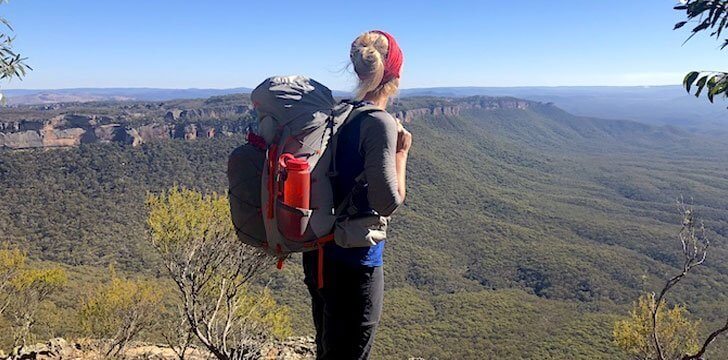
As a Sydney local, it only takes me about 1.5 hrs to be in the heart of the amazing Blue Mountains of NSW, so it’s no surprise that it’s my bushwalking spiritual home.
Hope you like the post!
Oh… and out of interest… what’s your bushwalking nemesis?
OK, if you’re a purist, one of those telemark gods or goddesses who move effortlessly downhill like the finest ballet dancers, you may want to look away now.
This post is not for you. In fact, it may annoy or frustrate you.
Seamans Hut – Mid Sept 2012
But here’s the thing…
As a pretty confident Intermediate (blue*) parallel skier, I was listening to all these amazing stories from my bushwalking/hiking buddies about going back country on the white stuff.
So last year, like a two year old on a sugar loaded high at Woollies, I stamped my feet and had a ‘me too, me too’ moment.
As luck would have it, my bushwalking club was having a joint trip with the Nordic Ski Club to Charlotte Pass in the NSW Snowy Mountains, right at the end of the season in mid September 2012. (Yes, I know, it might come as a shock to some overseas readers to learn that we have snow in Australia… and even Ski Resorts!)
So here’s what I learnt!
There are many ways to skin a cat: Just like you can go downhill fast on either a toboggan, skis, or your arse, there are different ways of cross country skiing on different types of skis. I found the easiest way to transition from downhill skiing to XC is by using resort telemark skis. I sourced mine from the awesome folk at Wilderness Sports at the Perisher Valley NPWS Centre. Friendly guys and happy to spend time on a busy rental day with a newbie like me. (If you watch my video, you will notice that my skis are wider at the tip than traditional XC skis. In fact, they look and behave a lot like traditional carved downhill skis – only with a free-heel… hence an easier transition! More traditional XC skis are straighter and lighter, making them trickier to turn unless you can master the elegant mastery of the Telemark Turn).
Go when the conditions are good: It’s a given really, but if you’re learning anything new on snow and likely to end up on your bum a bit, it’s always going to be more pleasant (and hurt less) if the snow is fresh, soft and forgiving. Trying to learn on icy yuckiness, when it’s blowing a gale and the sleet is cutting into your face, is not going to be that much fun.
Go with people at different levels: I was the only complete newbie with the club’s group for the week. Thankfully, they were a very generous bunch and I learned heaps every day we went out. Each day there were a number of different trips organised, going in different directions for people of varied experience.
Know your limits: Be realistic about the distance you think you can achieve each day and your skills. Don’t be shy about taking a professional XC skiing course if you feel you’re not progressing.
Map and compass essential. Go Pro optional!
Safety in numbers: All the usual things apply when heading into the wilderness anywhere and any time of year. Travel in groups, carry water, food, map and compass, GPS, PLB, first aid, etc, etc… There are a few additional bits that you might need to consider when going out in the snow.
Blistering good time: Doesn’t affect everyone, but I had some cracking blisters from the free heel movement of the boots and skis. Possibly, this was brought on by the downside of the resort tele skis… they (along with the solid boots) are heavier than the traditional XC skis with their soft laced shoes and lightweight skis.
So, in summing up, if you’re a keen bushwalker, who also happens to be a skier, I thoroughly recommend giving the backcountry a go. There’s something wonderful in that moment when you duck under the orange boundary rope and head out into un-tracked beauty.
Bushwalking meets skiing
It truly is taking the best bits of bushwalking/hiking and skiing and putting them together. Throw in good mates and great weather/conditions and you have the making of a wonderful experience.
Apres Ski Charlotte Pass Style
*In Australian ski resorts we use a 3 level system of green (beginner), blue (intermediate) and black (advanced).
One of the tricky issues I had when I first started bushwalking, was figuring out exactly what to do with, well, the issue. OK, periods. Freakin’, bloody periods. Or as the horn-rimmed glassed ladies in the 1950s school education videos would pronounce, “men-stroo-ay-shun”.
Random blue liquid (my nod to sanitary product advertising)
When I joined my fabulous bush walking club around 1999, the demographic of members was a little past having to worry about such things, so my hesitant enquiries to a female member were met with a bit of a, ‘hmmph’. Not particularly helpful. Thankfully, the club has gone through somewhat of a revitalisation over the past 5 years and of our 800 or so members, around 20% are in their 20s and 30s.
Let me paint you a picture… heck, I had the painters in, so I may as well…
Ettrema Gorge, Morton NP
Day 1 of a 5 day east-west crossing (Yalwal to Bungonia Gorge) of Morton National Park in New South Wales. On the drive down, we stopped at the lovely village of Berry in the local park for a pee-stop and what do you know?
I’d been cursed by the Red Fairy and her unwanted relatives – Aunt Flo and Cousin T.O.M**.
Yes, that’s right – I’d got the painters in, was surfing the crimson wave, reciting the periodic table or as my french friends might say, Les Anglais arrivee!
Thankfully, I was prepared and had brought with me what I needed, but as this was my first period during an overnight bush trip, it was going to be a bit of an experimentation.
Ziploc bags, toilet paper, tampons, hand sanitiser & my discreet Qantas baggie to keep it all in (warning for the weight nazis though).
Working on the premise of leave no trace, I had decided that burying tampons was not going to work for me. And when you think about how long something like this would take to degrade or breakdown, regardless how properly you bury them or how biodegradable they may claim to be, the sheer nature of them is bound to attract wildlife who may dig it up and even attempt to eat it. Need I say more?
Day 3: So there I was, sitting around the dying embers of the fire, long after Fijian midnight (9pm) which is my traditional hiking bedtime, waiting…
…waiting…
…waiting…
…for the bloke on the other side of the fire to go to bed. Everyone else had left seemingly hours before and I was really hoping that he would follow and leave me in peace to hold an ancient and druid like ritual, akin to sacrificing virgins.
Yes, I was wanting to burn the previous 3 days used tampons. It’s not gross people – this is life – get over it.
By this stage, my already tightly packed backpack was starting to bulge more than usual with the additional waste double ziplocked and hidden from view. I really wanted to deal with it all tonight otherwise my companions might start to wonder why my pack was getting bigger, whilst theirs were getting smaller from eating their food supplies.
Anemone Fungus, Morton NP
Finally, my fellow male bushwalker decided to go to bed. However, as is usually the case, his desire for leaving was brought about by the fire dying down and the temperature dropping.
Great. I was new in the club and had yet to refine my fire-lighting skills.
I’m not going to put it any blunter than this, but the first rule of lighting fires is that damp material/timber is never a good idea. Need I say more?
I’ll let your vivid imaginations draw the visual pictures for what the next hour of my life looked like.
So here’s what I’ve learned since this experience and over the years:
Privacy – It’s a logical one, but you might be pleased for a bit more privacy than a normal quick pee. Being interrupted mid process might be quite embarrassing for both the interrupter and the interruptee.
Setup – I like to ensure that I’ve got all that I need close at hand around me and like any good squat, I’m looking out for stray branches or stinging nettles. Oh, and watch out for downhill slopes as I once watched (in slow motion) my baggie with toilet paper roll over Splendour Rock in the middle of the night.
Hygiene – This is one of the key considerations. I’m a fan of hand sanitiser before and after, although I know other people prefer baby wipes or bush soap and water.
Ziploc bags (x 2 for double bagging used tampons, x 1 for keeping toilet paper dry, x 1 for keeping new tampons dry.)
Toilet paper – As the photo shows, I would pack more than usual for a 2-3 day trip. Rolling off my own ‘roll’ at home and stashing in the ziploc bag. Use the paper to wrap the used tampon before placing it into the double ziploc bags. Just calculate how much paper you’re going to use. You might be surprised how much you go through.
Outer bag for carrying everything. I use an old Qantas toiletries bag, although if you’re weight conscious, just a simple plastic bag would be fine.
Spare undies… just in case
Washing – More so than at other times, I feel like it’s a good idea to have a wash at the end of the day, whether it be a dry clean, APC or wash in the creek/river. Also good for helping out on the hygiene stakes.
If you’re going to burn, you need a controlled, hot fire and to be good at sustaining/building/dousing said fire. Keep to the general rules of burning things on the fire – see my blog posts on Etiquette Iand II. Oh, and don’t be afraid to announce to those who won’t go to bed that you need to burn some items on the fire that they may not want to be around for. From experience, some guys just don’t get it and unfortunately, you may need it spell it out.
If you’re carrying out, be prepared to ensure your parcel of joy cannot be attacked by animals at night and leave enough room in your pack for said parcel to grow as the days continue.
Most importantly, don’t let it stop you from getting out there and enjoying the bush.
Handy tips:
Although a fly or hammock might be a great lightweight alternative to wilderness shelters, when it comes to privacy, washing and having a clean space to get sorted in the morning/evening – nothing beats your own tent.
When it comes to hygiene, you may want to consider using applicator tampons when in the bush. However, be aware that these also mean more waste to dispose of.
There is also a commercial available gadget on the market called Divacup. They call it “the non-ick alternative to tampons”… but I’m not so sure. Have you tried them?
Q: What advice or tips can you add to this list?
*The reason I called this post, (Not so) Secret Women’s Business, is because when you’re out on the track, it’s important that we’re all looking out for each other. It’s not that we want to make a big deal out of it, but hey, if you see a normally fit-fast-fabulous-female is lagging behind or you feel it necessary to complain if she’s taking a lot of loo breaks that seem to last for ever… have a bit of grace. Oh, and it might help you understand why the women are staying up late around the fire when throughout the day they’ve been lagging behind or seem more tired than usual!