But first, a preamble
I wrote this article in 2015. In the years that have passed, so much about the wild places we venture into, has changed; we’ve changed.
It was a time with few other voices in this space and before global and social changes nudged so many more people to turn their attention to the wonders and power of spending time in nature.
I hesitate leaving this post live. Now that the challenges of increased visitation and impacts grow faster than land managers and their budgets can handle, and new explorers race to find themselves in places ahead of their skill and experience level, unknowingly skipping ahead past staged development or mentoring that many of us old-guard benefited from.
The style of trip I describe in this article isn’t for everyone. Thankfully, it’s not for most.
For now, I’m leaving an edited version of the article here and this could change at anytime.
Warmest, Caro
What is off-track walking
For people who’ve only ever walked on defined tracks and trails, the concept that there’s a whole other world of exploring and adventuring out there, may come as a shock. It’s the world of off track hiking or for the purists: bushwalking – walking in the bush, not on a track.
I know it came as a shock to me when early in my bushwalking club days, I signed up for a day walk that in the description said, “includes 1km rough off-track section”. I honestly didn’t really understand what that meant.

Even though I enjoyed bushwalking, without realising it, I’d built invisible walls each side of tracks or trails that I walked upon. Remember Wonder Woman and her invisible plane? Well these walls were kinda like that.
The shock I had that first day breaking through that invisible wall happened when we stopped at a certain point, on what was a perfectly good single-track, and the leader (after checking map and compass) declared, “Here we go… into the great unknown!”
We turned to our right and proceeded to walk, push and haul ourselves through thick scrub up a ridge to emerge a km later on a firetrail.
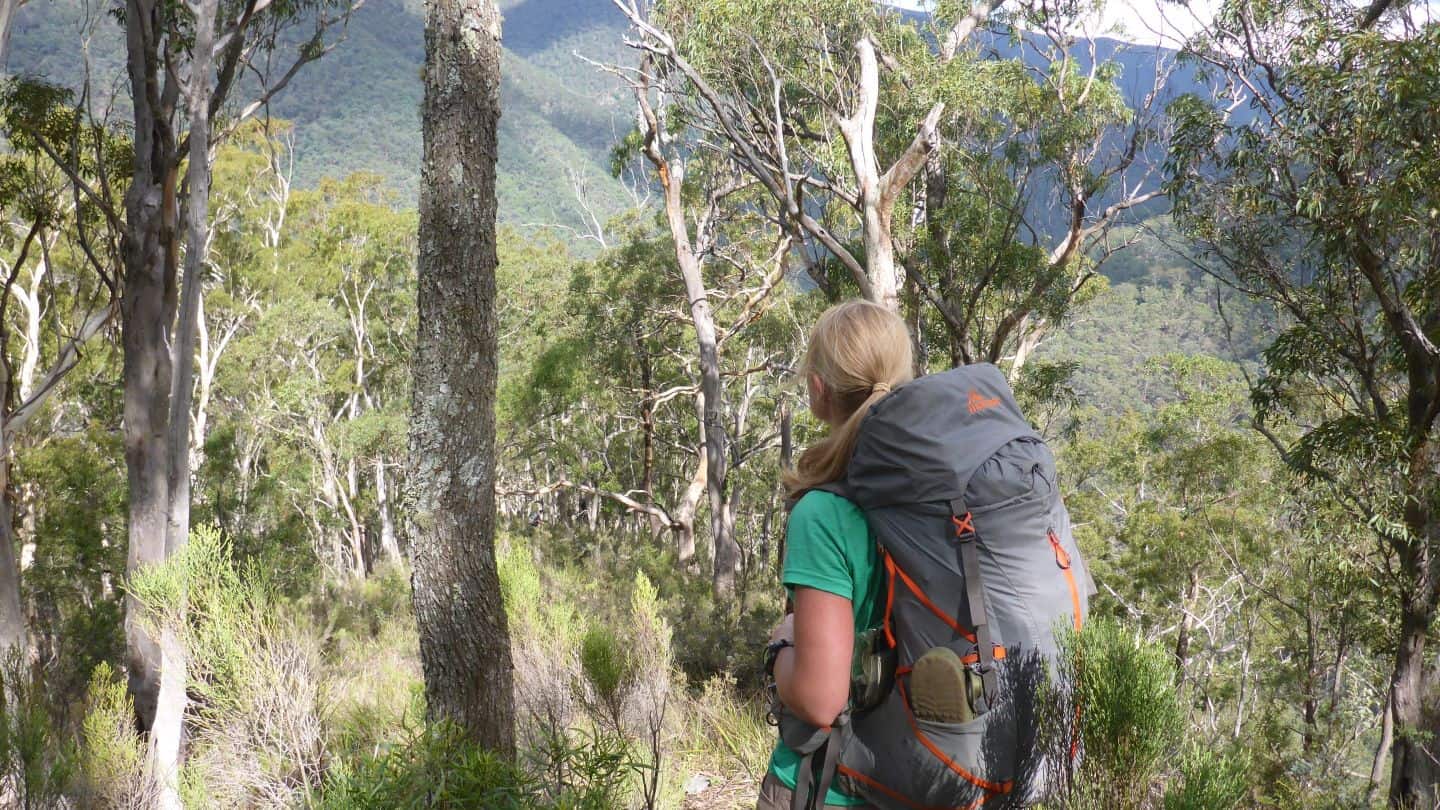
I remember feeling like I was being re-born from the birth canal of nature as I tumbled out onto the firetrail.
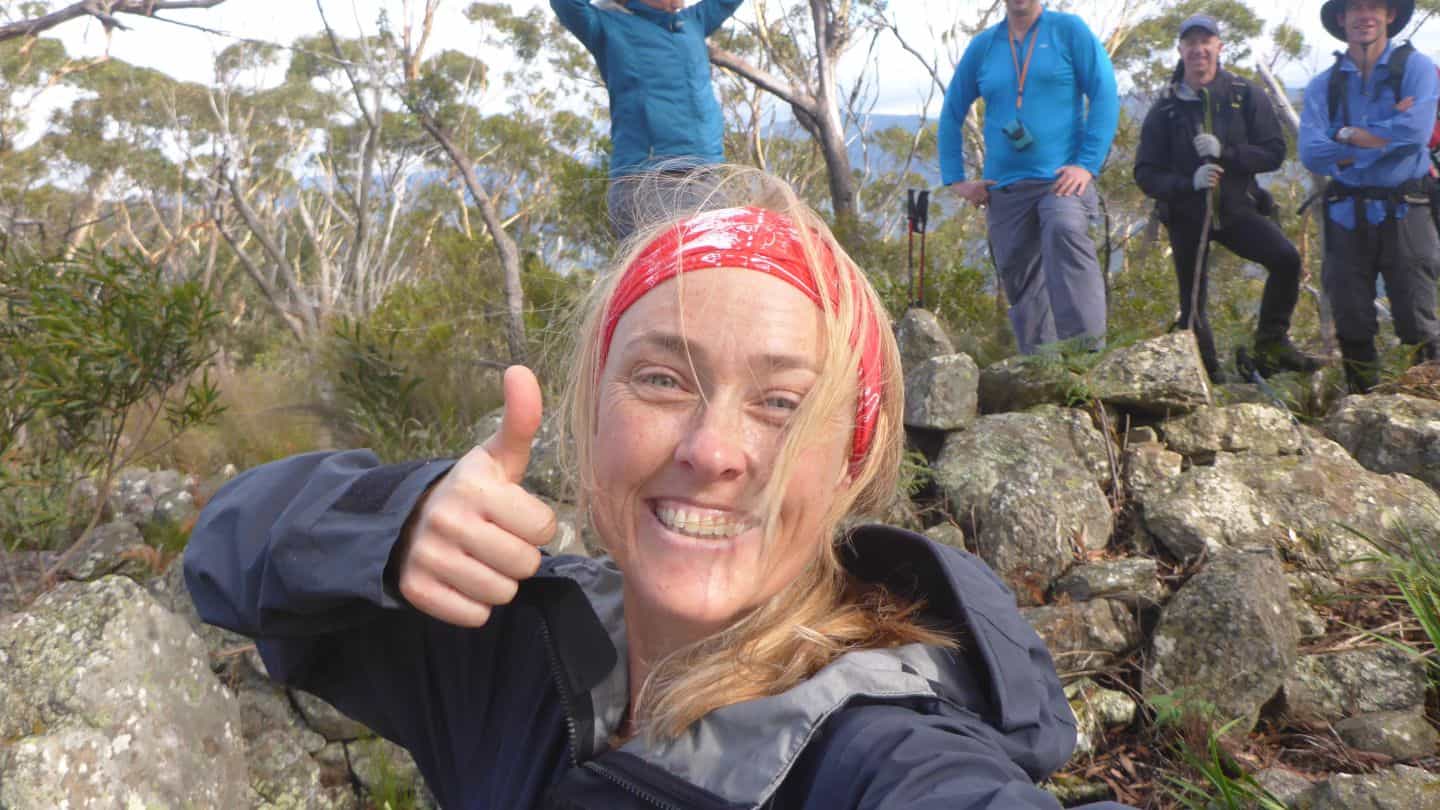
After getting over my initial WTF expletives, and as the wounds began to heal, I realised that in a way I had been re-born and baptised all at the same time. To quote another religious phrase, ‘my chains fell off, my heart was free’ and I could see for the first time that there really were no walls to the ways in which I could experience wilderness and nature.
I had a lot to learn before being able to lead myself and others in this style of adventuring, but I knew I wanted those skills.
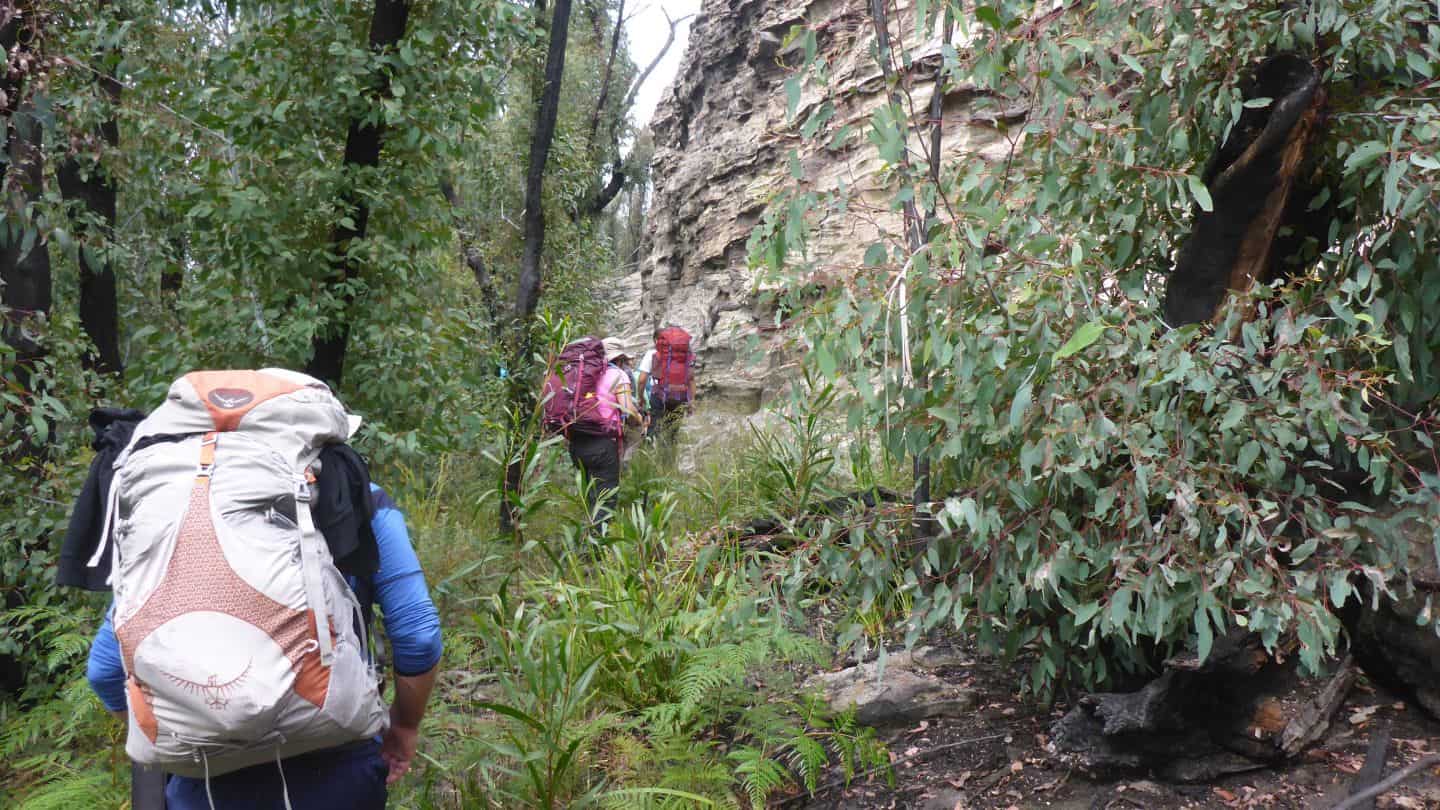
Yet again, my adventure gland nurtured through a childhood love of The Famous Five and The Lost Islands was sparked and came alive as I realised that my adventures didn’t have to be ones that someone else had had before me, laying down their own path and dictating the ways in which I must tread.
In Australia, you might hear the term bush-bashing (bushwhacking in the US). I don’t use it, or like it much.
It implies a violent aggressive act, one that seeks to conquer or dominate; that is not what off-track walking is.
Walking off-track is about moving from A to B, through terrain and vegetation, in a way that conserves energy and the environment.
It’s what the activity (some would say art) of rogaining, is all about.
How to walk off-track
I believe off-track walking should be done in line with the Bushwalkers Code of Ethics.
Essentially, make it very hard for someone to see if you’ve been there first. This means:
- Keep groups small. (I personally think that even though in NSW NPWS guidelines for wilderness areas are 8, if I’m going off-track, I prefer 4-6.) I don’t go off-track solo.
- Don’t create new tracks, build cairns, snap twigs unnecessarily or leave markers such as tape. Aim to ghost an area, like you were never there.
- Know how to navigate through traditional map and compass methods, route finding and reading the ground. Have a navigation app and carry a satellite communication device and/or PLB.
- Plan for contingencies like being be-nighted (an unexpected night in the bush) with extra food, shelter, etc.
- Don’t make navigation choices that can’t be reversed. Always have a contingency plan.
- Avoid going off-track in sensitive areas such as hanging swamp or places where the plants are easily damaged. In areas of sensitive vegetation, it can take as little as 6 passes for a track to form.
- Avoid going off-track near popular tourist tracks or areas which could encourage people without the skills to follow you or establish new tracks.
- If you don’t have the skills and equipment… don’t do it until you do. Joining a bushwalking club or getting involved with rogaining is a great way to learn.
- Check maps and identify boundaries to ensure you’re not trespassing.
It’s not all about pushing your body endlessly through hakea scrub in a medieval like flagellation ritual. (Although some of my friends feel I have a reputation).
When you learn some of the basics like sticking to open ridges, especially with shallow soils and avoiding gullies, you’ll find that walking in this way can sometimes be easier than an overgrown single track or fire trail.
Why walk into the bush?
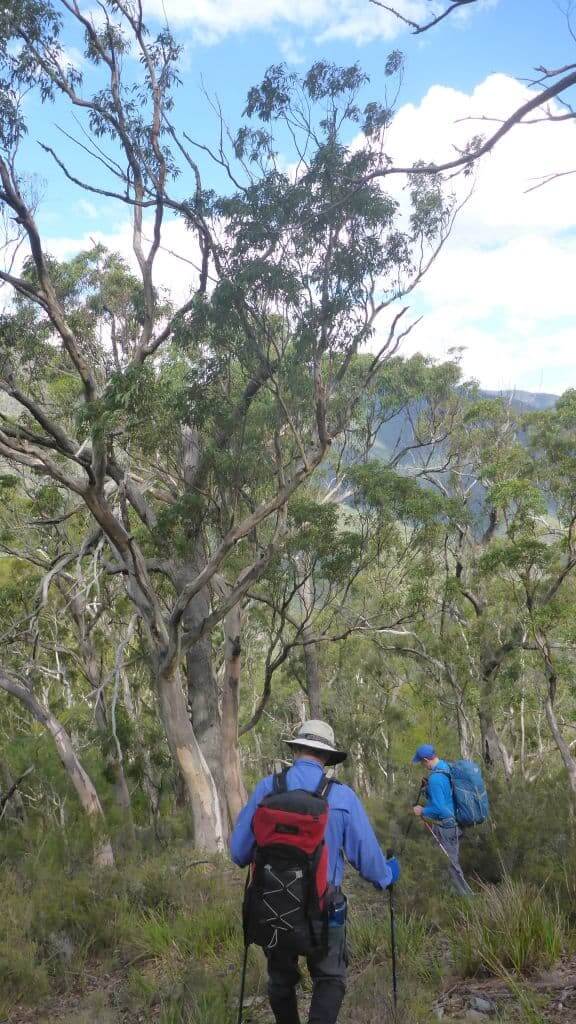
The thing I love about venturing off the path more travelled, is about opening myself up to the new and seeing things with fresh eyes. It’s curiosity, wonder and respect.
Respect for First Nations people who were taught how to travel, move and live in the bush. And learning about a new place and its terrain as my feet touch it and become part of its story, understanding I can’t control it or want to.
It humbles me as I continue to learn I am part of nature, not someone with a right over it.
Research
Spending hours beforehand analysing contours on a topographic map, wondering if a ridge or cliff line will actually allow us through (or “go” as we say) without technical gear and then finding yourself at the base of it and through trial and error (sometimes many trials and many errors) actually getting to the top.
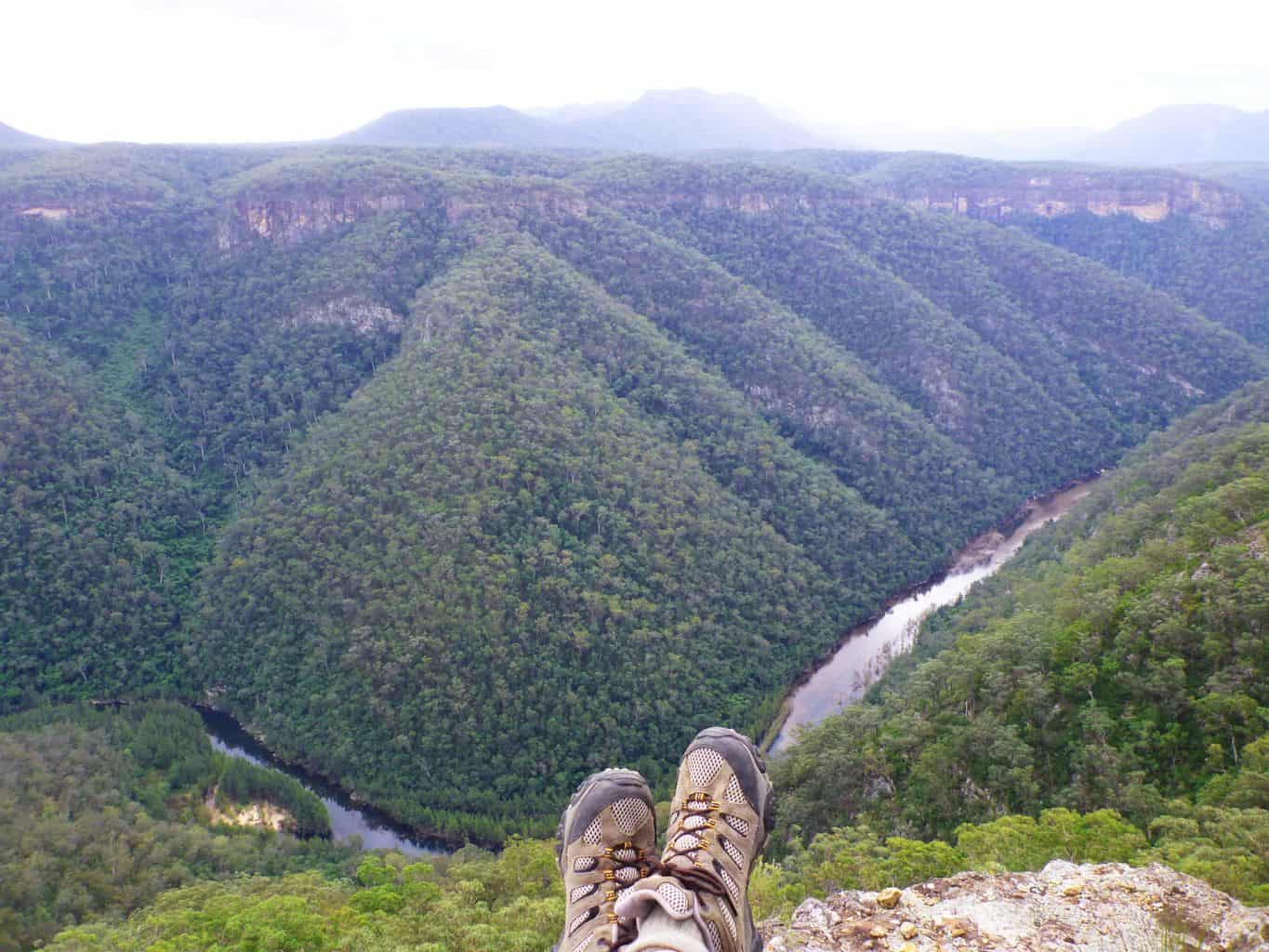
This kind of adventuring calls for many life skills such as problem solving, contingency planning, people management, risk assessments and a bloody good sense of humour, all tied up with a massive dose of curiosity, inquisitiveness and sense of wonder.
If you are wanting to take your walking to the next level and try something adventurous, then I thoroughly recommend giving it a go.
I rate it.